 Brindlewood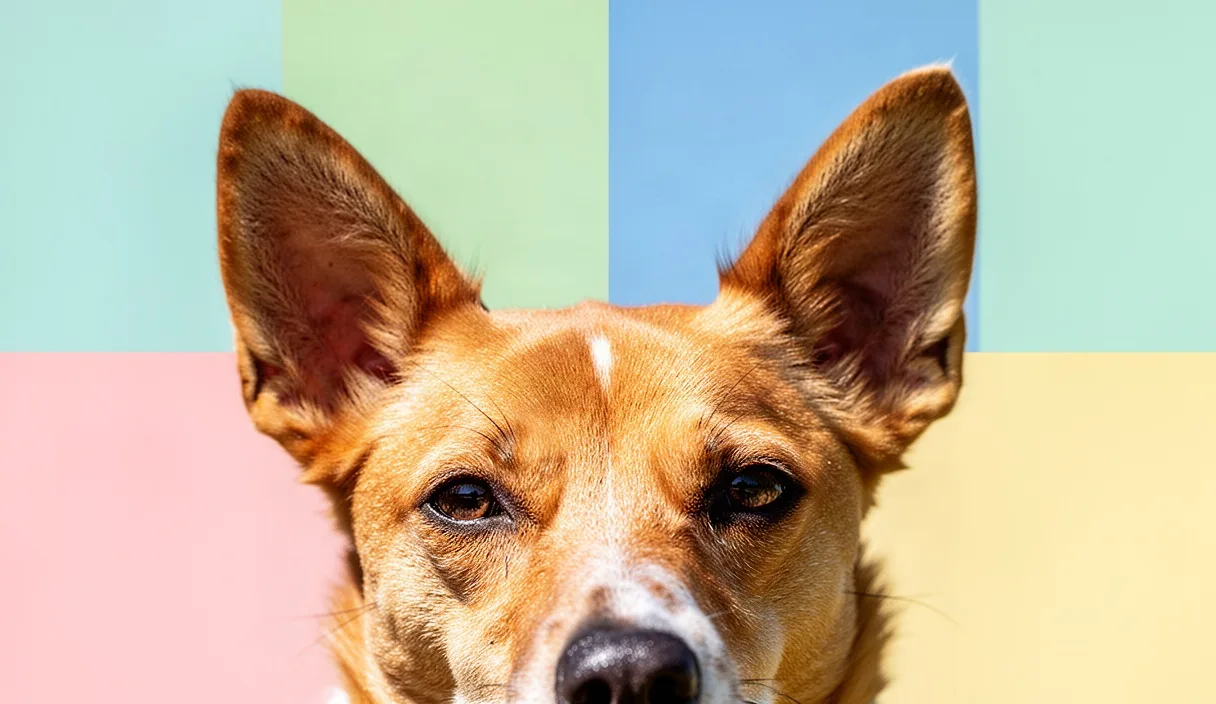
A dog's ears move before the rest of the body catches up. They tilt, flatten, swivel, and rise, often in seconds.
This guide covers the common positions and what they tend to signal. It does not replace a trainer or a veterinary behaviorist for specific concerns.
Why ears are one signal among several
Ear position alone rarely tells the full story. A dog with forward ears and a stiff body is different from a dog with forward ears and a loose, wagging tail.
Breed shape changes what is visible. A German Shepherd's active vitality ears show more range than a Basset Hound's long, heavy ears. Some dogs, like Cavalier King Charles Spaniels, have ears that partially cover the ear canal at rest, which limits how much movement you can see.
Context matters as much as the ears themselves. A dog at the vet clinic with pinned ears is likely showing stress. The same pinned ears during a belly rub at home often mean something closer to contentment.
Read ears as one part of a pattern, not as a standalone answer.
Forward ears and what they usually mean
Ears pushed forward and slightly raised usually signal alertness. The dog has noticed something and is gathering information.
This can appear when a car pulls into the driveway, when another dog appears at the end of the block, or when a squirrel crosses the yard. The ears often move before the head turns.
Forward ears paired with a closed mouth and a still body can indicate focused attention that may shift toward tension. Forward ears paired with an open mouth, loose shoulders, and a soft tail usually indicate curiosity without stress.
- Forward ears, still body, closed mouth: heightened alertness, possibly building tension.
- Forward ears, loose body, panting or open mouth: interest without immediate stress.
- Forward ears with a hard stare: worth watching closely, especially around other animals.
If forward ears appear alongside growling or a stiffened tail, it is a good moment to redirect the dog's attention rather than wait to see what happens next.
Flat or pinned ears and their common causes
Ears pulled back flat against the head often signal fear, submission, or discomfort. This is one of the more commonly misread signals, since pinned ears can also appear during affection.
A dog greeting a trusted person with pinned ears, a low wagging tail, and a wriggling body is showing friendly submission. A dog with pinned ears, a tucked tail, and a lowered body near a stranger or in a loud environment is more likely showing fear.
Veterinary settings are a common place to see fear-based ear pinning. So are thunderstorms, fireworks, and unfamiliar dogs approaching head-on.
| Situation | Likely meaning | Other signals to check |
|---|---|---|
| Greeting a known person, ears pinned | Friendly submission | Loose tail wag, relaxed mouth |
| Vet exam table, ears pinned | Fear or stress | Tucked tail, wide eyes, stillness |
| Loud noise, ears pinned | Startle or fear response | Lowered body, seeking to hide |
| Approached by unfamiliar dog, ears pinned | Caution or fear | Stiff body, possible lip licking |
If pinned ears show up often in daily situations that are not classic fear triggers, it may be worth mentioning to a veterinarian. Chronic ear pain, from infections or allergies, can also cause a dog to hold its ears back.
Relaxed, neutral ear position at rest
A relaxed ear sits somewhere between fully forward and fully pinned. The exact angle depends on the breed and the individual dog.
At rest, most dogs hold their ears in a soft, natural position with no visible tension in the base. The dog may be lying down, standing loosely, or walking without any particular focus.
This neutral position is worth learning for each dog individually. A Labrador's resting ear position looks different from a Corgi's, but both represent a baseline the dog returns to when nothing is happening.
Knowing this baseline makes it easier to notice small shifts. A change from neutral to slightly forward, even by a small amount, can be the first sign that a dog has noticed something before a person has.
Combining ear position with tail and posture
Ears rarely act alone. Pairing ear position with tail height and body posture gives a clearer picture than either signal alone.
A few common combinations:
- Forward ears, high tail, stiff legs: alert and possibly guarding something.
- Forward ears, mid-height wagging tail, loose body: interested and comfortable.
- Pinned ears, low tail, crouched body: fearful or anxious.
- Pinned ears, mid-height wagging tail, wriggly body: friendly greeting behavior.
- Neutral ears, relaxed tail, loose body: calm, no particular concern.
Weight distribution adds another layer. A dog leaning forward with forward ears is different from a dog leaning back with the same ear position. The first often signals approach or investigation. The second can signal hesitation despite the alert ears.
When these signals conflict, for example forward ears with a tucked tail, it usually means the dog is uncertain. Uncertainty is a reasonable moment to slow down, add distance, or let the dog choose whether to approach.
A short reference for quick reading
This is not a complete list, but it covers situations that come up often in daily life with a dog.
- Notice the ear position first, without judging what it means yet.
- Check the tail: height, speed, and looseness of the wag.
- Check the body: forward lean, crouch, stillness, or looseness.
- Check the mouth: open and relaxed, or closed and tight.
- Consider the setting: familiar home, new place, presence of strangers or other animals.
- Decide whether the combination points toward comfort, alertness, or stress.
This sequence takes a few seconds once it becomes routine. It works best when done before reacting, not after a bark or a lunge has already happened.
Common mistakes
Reading ears in isolation, without checking tail or posture, is the most frequent mistake. A single signal can point in more than one direction.
Assuming pinned ears always mean fear is another common error. Context, and the dog's history with the person or situation, changes the meaning.
Ignoring breed differences causes confusion too. A Husky's naturally upright ears at rest are not the same as a Beagle's naturally low, soft ears at rest. Compare each dog to its own baseline, not to a generic chart.
Waiting too long to act on early signals, like a shift from neutral to tense forward ears, can mean missing the easiest point to intervene.
Next steps
Spend a few days simply watching a dog's ears without trying to interpret them. Note the baseline position at rest.
Once the baseline is familiar, start pairing ear position with tail and body posture during ordinary moments: mealtime, walks, greetings at the door.
If a dog shows frequent pinned ears, unusual head shaking, or sensitivity around the ears themselves, a veterinarian can check for pain or infection before behavior is the only explanation considered.
For dogs with ongoing fear or reactivity, a certified trainer or veterinary behaviorist can help build a plan suited to that individual dog.